Desire Inn review: timed hotel shifts with a gacha bolted on
The verdict
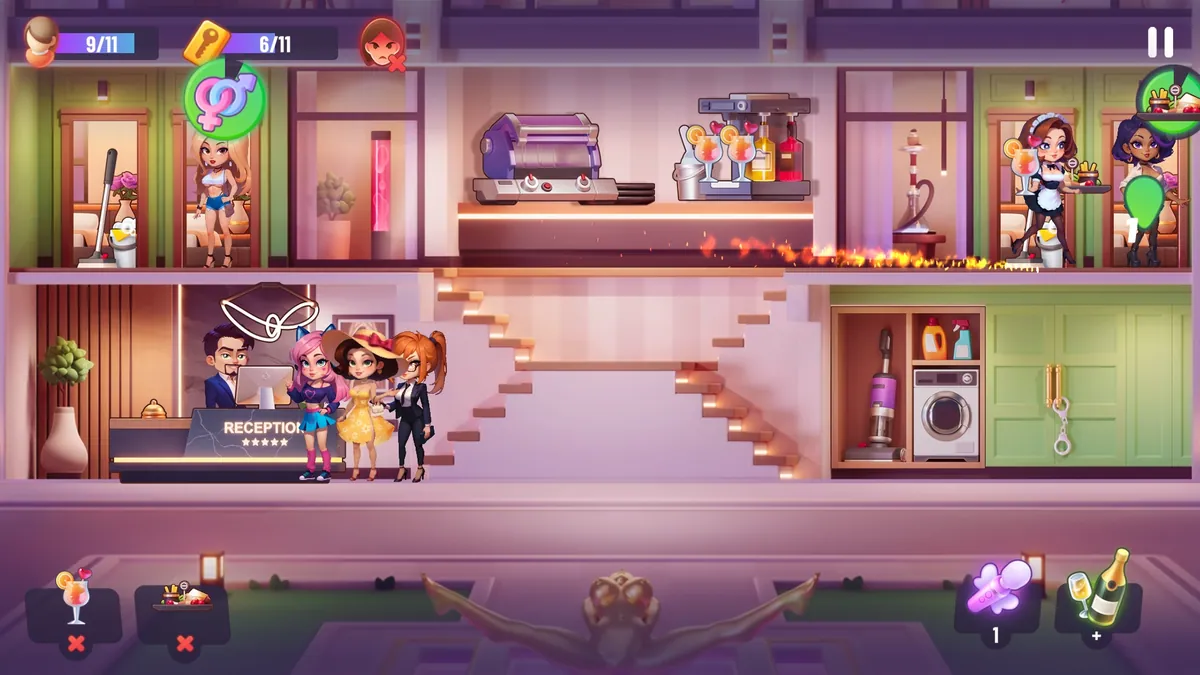
The genre label on this one is Casual and the tag list says Arcade, and between them they undersell what you actually do: Desire Inn runs timed service levels where you route guests, deliver orders and beat the clock. It is a time-management game, closer to the diner-dash lineage than to anything else in this catalogue.
That makes it the pick if you want something with actual pace. Most games here resolve automatically while you watch; this one demands hands and attention for the duration of a level, and the difficulty comes from your speed rather than your spending.
Between shifts sits the softer half: upgrade the hotel, unlock rooms and services, and advance conversations with guests. It gives the arcade levels a purpose beyond a score.
Two warnings. Recruitment is gacha, and the bonuses those characters bring feed back into the levels — so the timed challenge is not purely about your reflexes. And it carries the AI Generated Content tag, so quality varies visibly between assets. Neither is hidden, but both are easier to weigh now than three hours in.
How Desire Inn actually plays
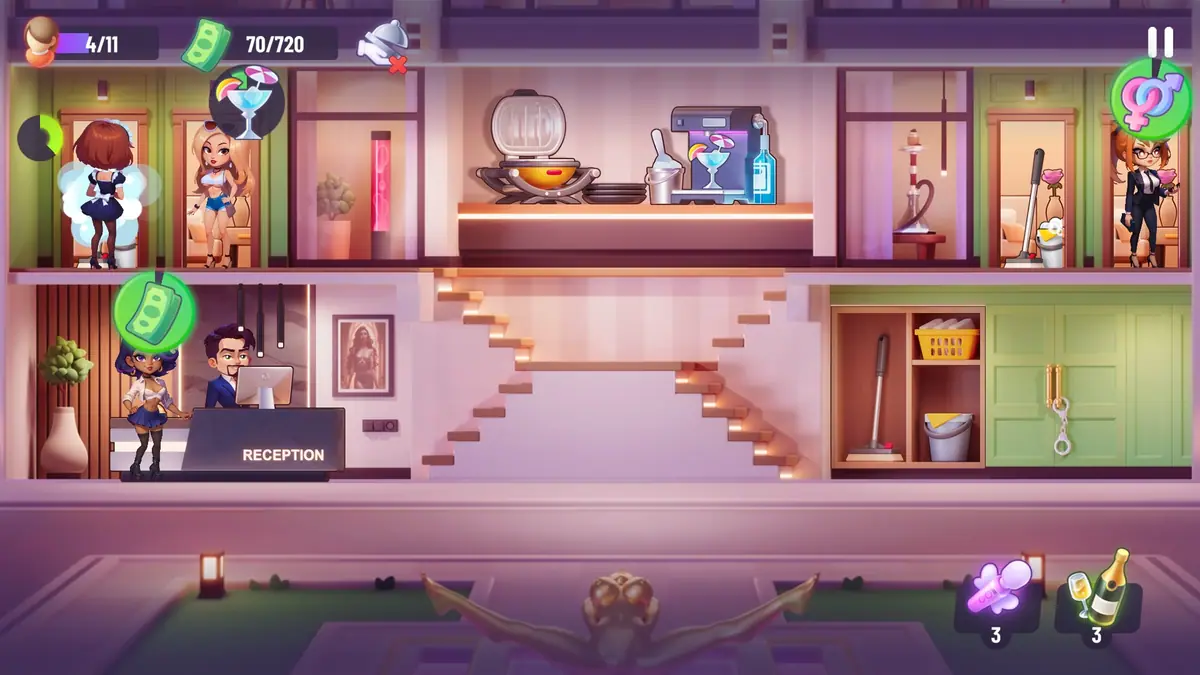
Levels are timed service rounds. Guests arrive with requests, you route them to rooms and deliver what they want before patience runs out, and the round scores on how much you cleared. Every second counts, in the literal sense the publisher means — the failure state is running out of time, not losing a fight.
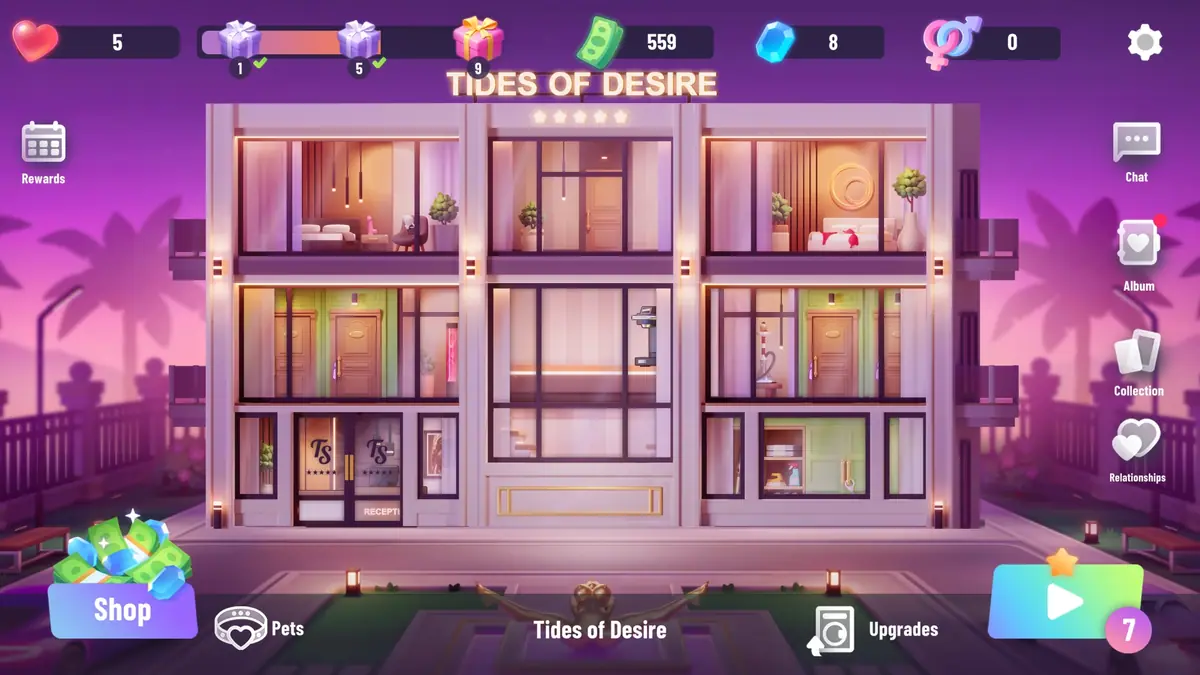
Between rounds you spend earnings on the hotel: unlock rooms, add premium services, upgrade what exists. Those upgrades feed directly back into level performance, because a better-equipped hotel serves guests faster. That loop — play a shift, improve the hotel, clear a harder shift — is the spine of the game.
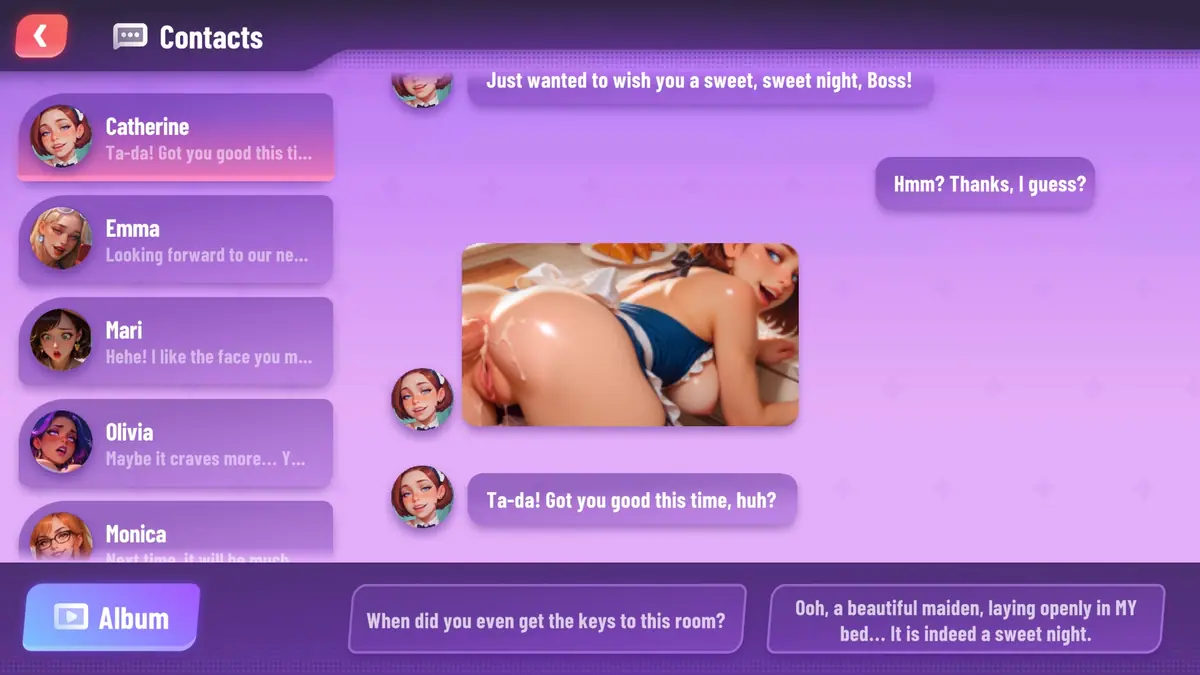
Guests are the collection layer and they have written personalities, preferences and dialogue branches. The Story Rich tag reflects an actual quantity of writing rather than flavour text, and conversation choices steer how each relationship develops.
Gacha recruitment sits alongside. Pulled characters bring bonuses that affect gameplay, so the collection is not purely cosmetic — it is a power system, and that is what to keep in mind when the timed levels start feeling tight.
The CCG tag on the listing is misleading; there is no deck and no card play anywhere in it.

What the free version really gets you
Desire Inn is free to play, with gacha recruitment and the usual currencies for upgrades and continues.
Early levels are clearable on skill alone. The hotel upgrades you can afford from normal play keep pace with the difficulty curve, and a competent player will not feel pressured for a good while.
The pressure arrives when levels start assuming bonuses you do not have. Because pulled characters carry gameplay effects, a wall that looks like a reflex problem is sometimes a roster problem, and that is the least satisfying kind of paywall — it disguises itself as difficulty. Recognising which one you are facing matters: if repeated attempts show no improvement, it is the roster, not you.
There is no competitive mode, so nobody else's spending costs you anything. Pay-to-accelerate, with the caveat above about the gacha blurring into difficulty.
If you spend, hotel upgrades are more reliable value than pulls: an upgrade is a known permanent improvement, while a pull is an undisclosed chance at one. No rates are published anywhere we could find.
Desire Inn vs. the alternatives
| Game | Core loop | Free content ends | Pay-to-win? | Pick it if |
|---|---|---|---|---|
| Desire Inn | Timed service rounds routing hotel guests, funding upgrades that feed back into level performance. | No hard stop. Later levels assume gacha bonuses, so a difficulty wall can really be a roster wall. | No competitive mode, but the gacha blurs into difficulty — pay-to-accelerate with a caveat. | You want a game with actual pace rather than one that resolves itself. |
| Horny Villa | Merge board feeding mansion renovation; untimed and entirely self-paced. | Similar curve, but the slowdown is waiting rather than difficulty. | Pay-to-accelerate, with no gacha blurring it. | You want zero time pressure. |
| Kink Inc. | Idle business management with a comedy storyline; income accrues offline. | Later — nothing demands your reflexes or your presence. | Pay-to-accelerate. | You want management without any arcade element. |
Questions people actually ask
Is Desire Inn a time-management game?
Yes, despite being filed under Casual. Levels are timed service rounds where you route guests and deliver orders against the clock, closer to the diner-dash lineage than to anything else in this catalogue.
Is Desire Inn pay to win?
There is no competitive mode, so no other player affects you. The complication is that gacha characters carry gameplay bonuses, so a difficulty wall can actually be a roster wall wearing a difficulty costume.
Does Desire Inn use AI-generated art?
Partly — it carries the AI Generated Content tag and quality varies noticeably between assets. Worth knowing before you invest hours if that matters to you.
What should you spend on in Desire Inn?
Hotel upgrades ahead of gacha pulls. An upgrade is a known permanent improvement to level performance; a pull is an undisclosed chance at one, and no rates are published.
Is Desire Inn a card game?
No. It carries a CCG tag but there is no deck, no cards in play and no card combat. The collection is a roster of characters with gameplay bonuses, not a deck.
How do you get past a level you keep failing?
Work out whether it is speed or roster. If repeated attempts show no improvement at all, the level is assuming bonuses you do not have, and grinding upgrades will help more than replaying it.
If you like Desire Inn, try these





Filed under Casual · AI Generated Content · Animated Sex · Arcade · BDSM · Big Ass · Big Breasts