Shelter 69 review: bunker management with a last-man-alive premise

The verdict
The setup does something slightly cleverer than the usual excuse plot: no nuclear winter, no fire — a chromosome changed and the men died out, and you walk out of a bunker as the last one. That framing lets the writing treat you as a resource other factions want to control rather than a hero everyone adores, and the game is more interesting for it.
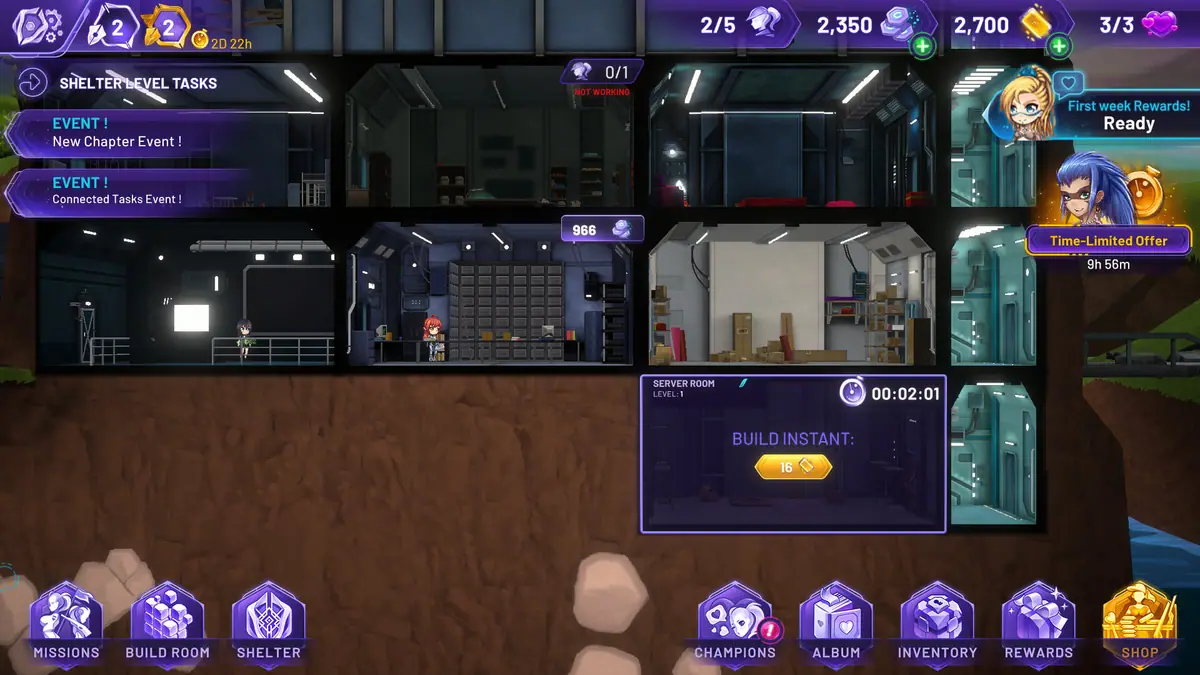
Mechanically this is shelter management. You expand rooms, assign crew, balance production, and push out into the wasteland. The High Depth Gameplay tag is not empty — there are more interlocking systems here than in most of this catalogue, and the base genuinely rewards planning.
Good pick if you like management games and can tolerate a slow opening while the systems unlock. Bad pick if you want immediate gratification, because the first hour is mostly tutorial and the depth arrives later.
English only, which is a real limitation for a game carrying this much text. It has been running since May 2022, so the content base is substantial.
How Shelter 69 actually plays
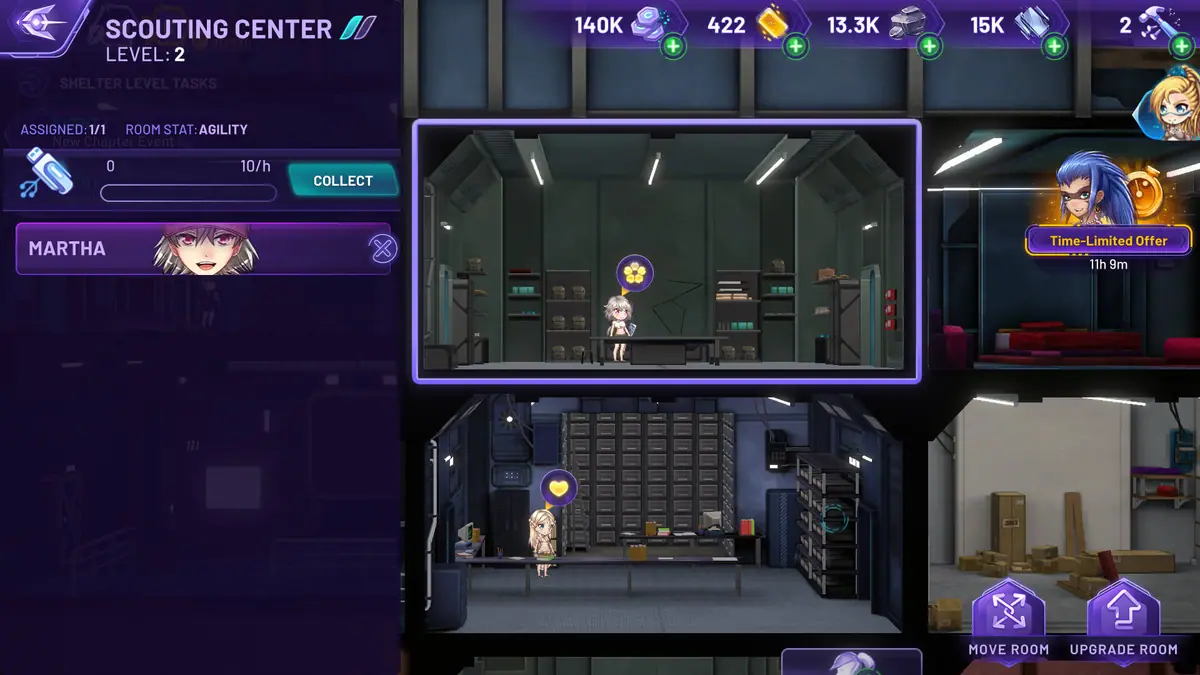
The shelter is the engine. Rooms produce resources, crew members staff them, and expanding means balancing what you can build against what you can supply. Assigning the right character to the right room matters because they carry traits that affect output, so this is closer to a real management game than the idle tycoons nearby.
Crew progression runs through Character Evolution — members level, improve and unlock capabilities, which means investing in the crew you have competes against recruiting new. That trade-off is constant and is where most of your decisions actually live.
Outside the shelter is the wasteland, which supplies the expedition layer: send crew out, deal with encounters, bring back materials. This is where the faction writing arrives and where the story advances, and it gates on shelter capacity, so the two halves feed each other.
Combat is present but not the point. It resolves from squad composition and statistics rather than moment-to-moment input, so preparation decides outcomes as it does elsewhere in this catalogue.
The chibi art style is a deliberate contrast against the post-apocalyptic setting and the tone of the writing, which plays the premise for dark comedy rather than grimness.


What the free version really gets you
Shelter 69 is free to play, monetising crew recruitment and the resources that gate shelter expansion.
The management core is free-friendly because it is fundamentally a time-and-planning problem. A player who assigns crew well and expands in a sensible order progresses steadily without spending, and the game does not lock rooms or story behind purchases.
Where it tightens is expansion pace. Later rooms need materials in quantities that outstrip what a day of production yields, so progress shifts from continuous to punctuated — build, wait, build. Money compresses that wait.
Recruitment is the other lever. A broader crew means better trait coverage across rooms, and coverage is what makes a shelter efficient, so a paying account runs a tidier operation rather than a strictly more powerful one.
There is no meaningful competitive mode, so nobody else's spending costs you anything. Pay-to-accelerate.
If you spend, resources that unblock a specific expansion are better value than recruitment pulls, because a room you cannot build is a hard stop while a missing crew member is only an inefficiency. As elsewhere, no pull rates are published.
Shelter 69 vs. the alternatives
| Game | Core loop | Free content ends | Pay-to-win? | Pick it if |
|---|---|---|---|---|
| Shelter 69 | Expand a shelter, assign crew by trait, run wasteland expeditions that gate on capacity. | No hard stop. Later expansions need more materials than a day produces, so progress becomes punctuated. | No real competitive mode — pay-to-accelerate. | You want an actual management game and will sit through a slow opening. |
| Kink Inc. | Idle business management with a comedy storyline and rotating weekly events. | Similar shape, but idle income keeps accruing while you are away. | Pay-to-accelerate. | You want lighter systems and stronger writing. |
| Fap CEO | Base-building idle tycoon; studios and equipment tiers rather than crew traits. | Later — idle income means you are never blocked, only slowed. | Pay-to-accelerate. | You prefer offline accrual to active planning. |
Questions people actually ask
Is Shelter 69 an idle game?
No. It is a management game — rooms produce only while supplied and crew must be assigned deliberately. Unlike the idle tycoons nearby, leaving it closed does not accumulate meaningful progress on its own.
Is Shelter 69 pay to win?
There is no meaningful competitive mode, so nobody else's spending affects you. Money compresses the wait on later expansions and broadens crew trait coverage — pay-to-accelerate.
What should you spend on first in Shelter 69?
Resources that unblock a specific expansion, ahead of recruitment pulls. A room you cannot build is a hard stop; a missing crew member is only an inefficiency you can work around.
Is Shelter 69 slow to start?
Yes. The first hour is largely tutorial and the interlocking systems unlock gradually. The depth that makes it worth playing arrives later, which is a real barrier if you want immediate payoff.
What is the story about?
A plague changed a single chromosome and the men died out, leaving you the last one alive as you exit your bunker. Factions treat you as a saviour, a pawn or a commodity depending on their interests, which gives the writing more to work with than the usual premise.
What languages does Shelter 69 support?
English only. That is a genuine limitation given how much written content the game carries, and there is no indication of other localisations.
If you like Shelter 69, try these





Filed under Casual · Animated Sex · BDSM · Character Evolution · Chibi · Double Penetration · Free to Play