Living With Temptation 1: Redux review: a domestic drama with a stat sheet
The verdict
Where most of this catalogue sells fantasy, Living With Temptation sells a domestic situation: Justin and Tracy are a married couple with a four-month-old, Tracy has gone back to work, and the nanny they hired is a problem. The drama is the product, and it is more grounded than almost anything else here.
That grounding is the reason to play it. The premise generates actual tension because the stakes are ordinary — a marriage, not a kingdom — and the writing takes the situation seriously enough that choices feel consequential.
It is the wrong pick if the central premise does not appeal. The game is explicitly about infidelity and is tagged accordingly; there is no route where that theme is absent, so a reader who finds it uncomfortable should not expect to opt out of it.
Redux is a rebuild of an older title with updated 3D presentation. If you played the original, the story beats will be familiar and the value is in the visual work rather than in new plot.
How Living With Temptation 1: Redux actually plays
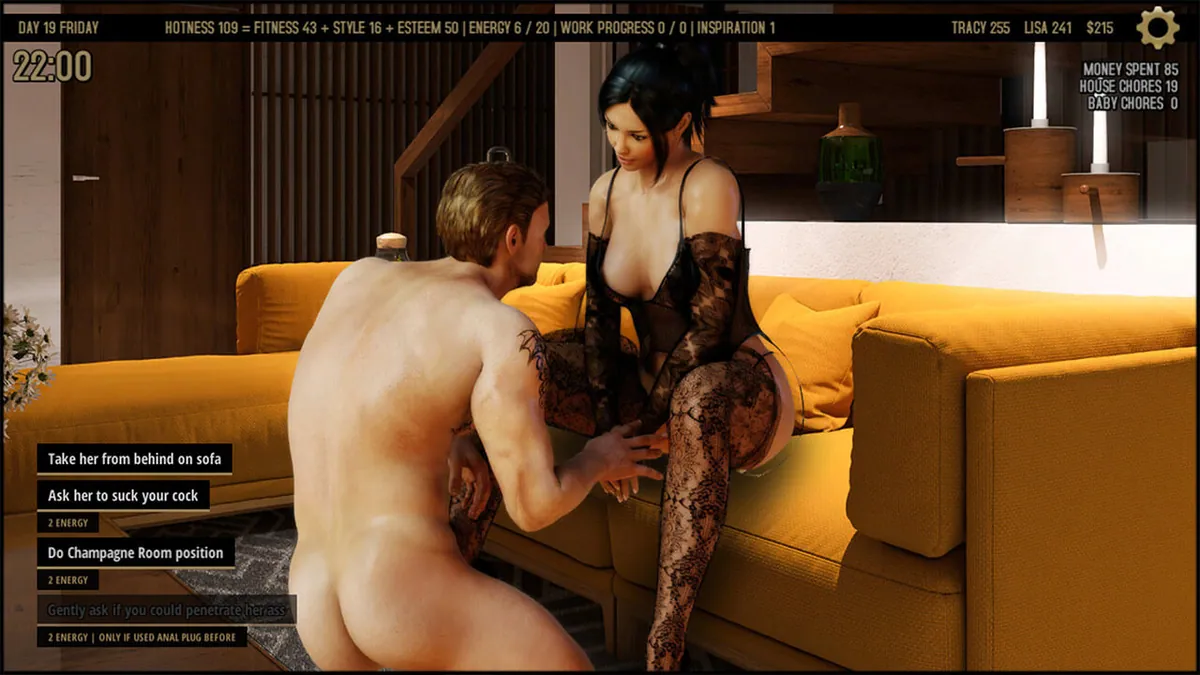
Structurally this is a visual novel with a light management layer bolted on, and the two halves pull in slightly different directions.
The novel half is scenes and dialogue choices. You play Justin, you decide how to respond to Tracy and to Lisa, and those decisions steer which relationship deepens and which deteriorates. Branching is meaningful — the game is built so that being a good husband and pursuing the nanny are genuinely opposed strategies rather than parallel collectibles.
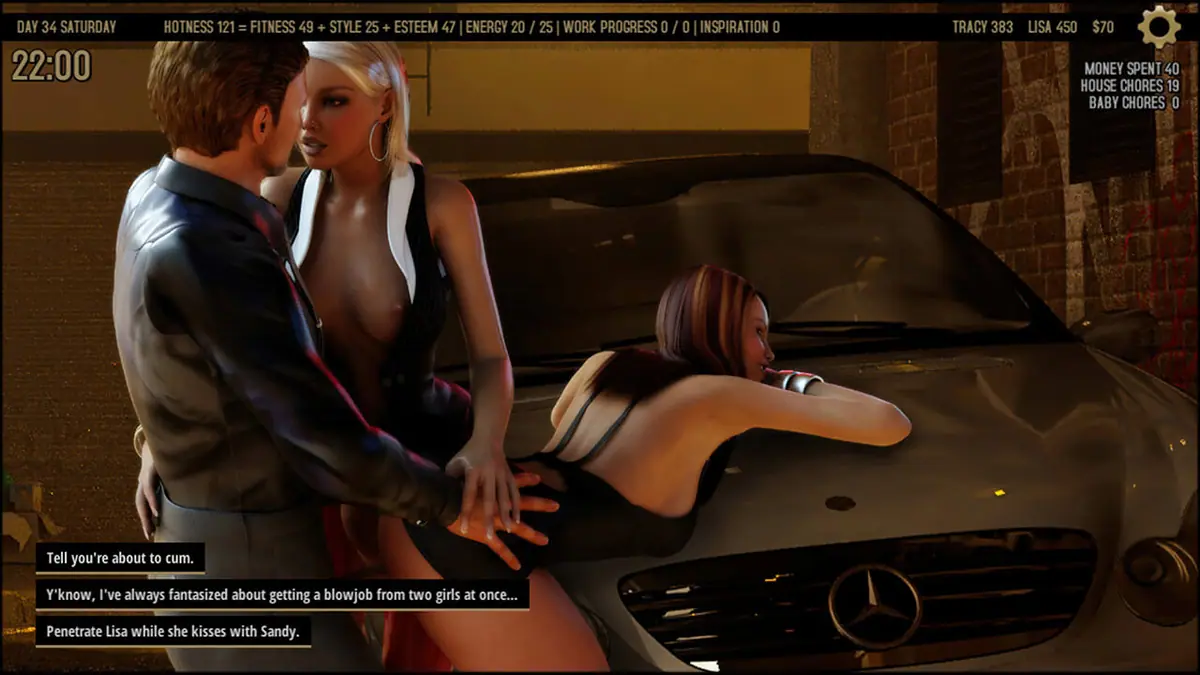
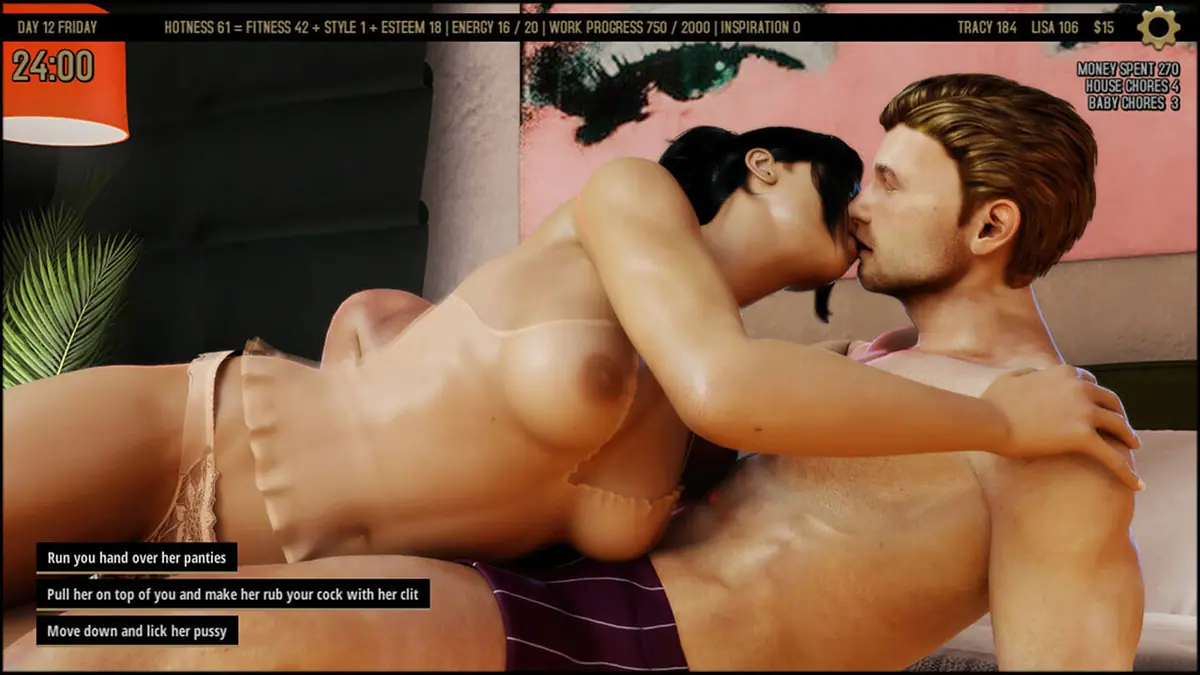
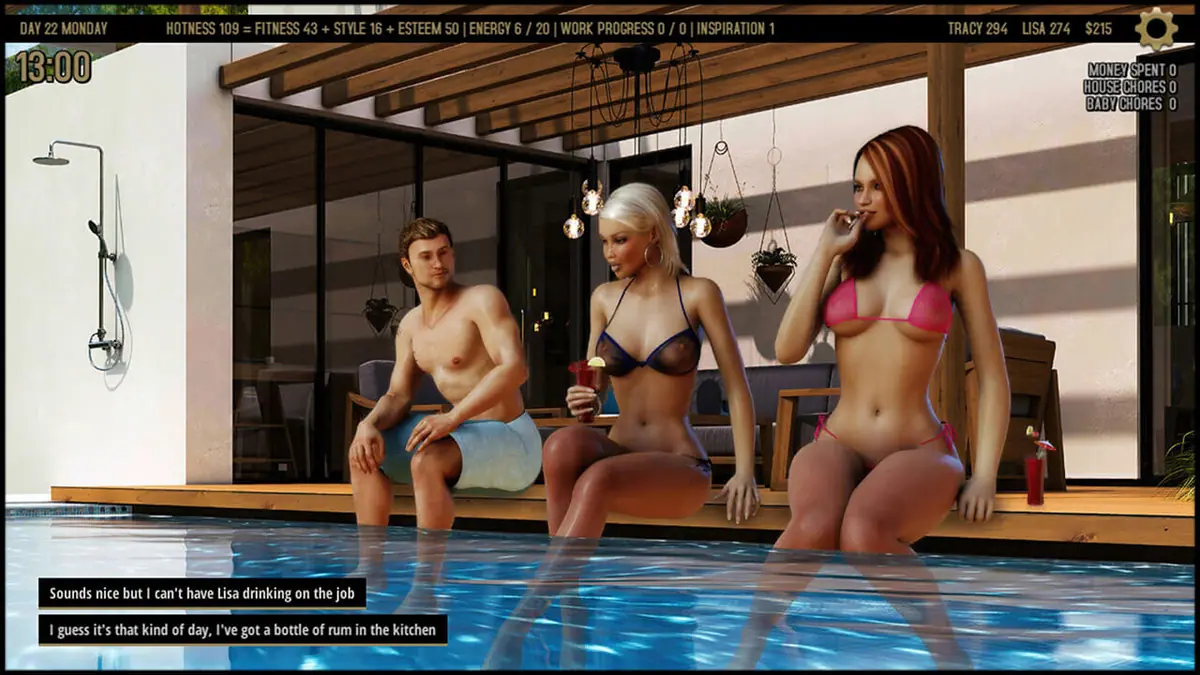
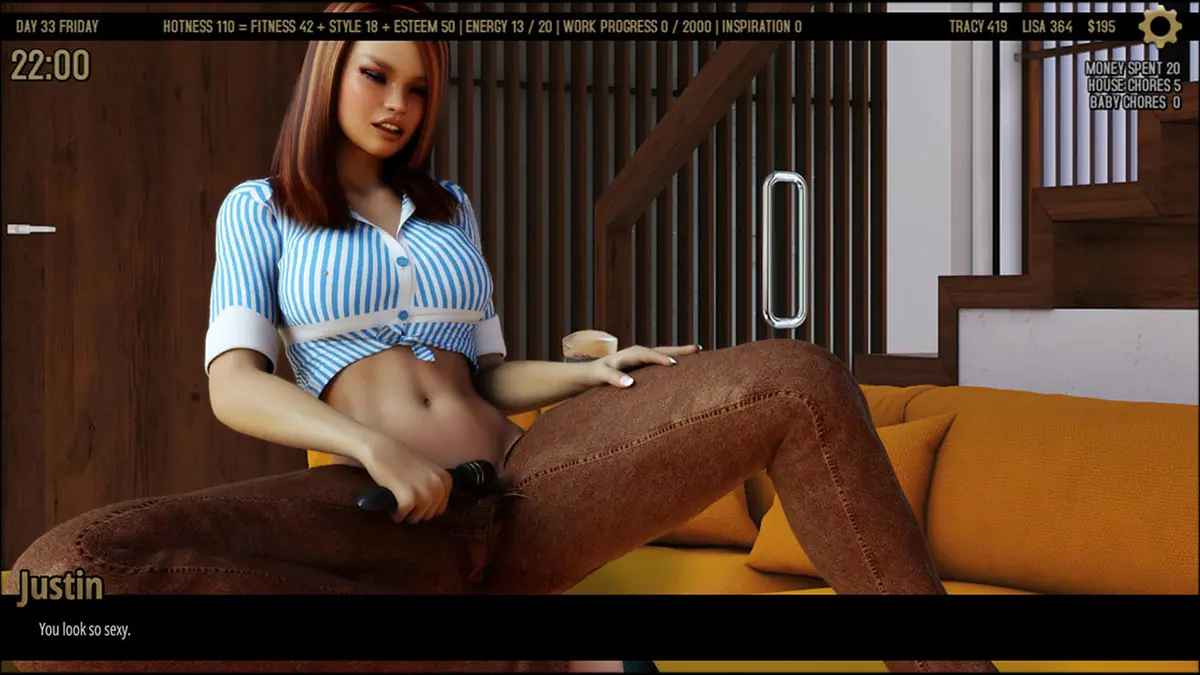
The management half is stat-raising, which the game itself compares to an RPG. Justin has statistics you improve through activities between scenes, and those statistics gate options — a more attractive, better-earning Justin unlocks approaches that a neglected one cannot take. In practice this means scheduling: deciding what to spend limited time on before the next story beat.
Whether the stat layer improves the game is arguable. It adds a resource dimension that makes choices feel earned, and it also adds repetition to a story that would otherwise move faster. Readers who came for the writing sometimes find it friction; readers who want the choices to have a cost usually find it justified.
The presentation is 3D rendered with animated scenes, which is where the Redux rebuild concentrated its effort.
What the free version really gets you
Like other visual novels in the catalogue, this is a finite product rather than a live-service game, so the usual free-to-play analysis does not apply cleanly.
There is no energy system, no premium currency, no daily reset and no escalating cost curve. You get the whole story and the whole stat system, and no part of the game becomes more expensive the further you get. What you pay is decided once.
The stat-raising layer does introduce a time cost that behaves a little like a soft gate — you cannot access every option on a first run because your statistics will not support all of them — but that resolves through replaying with different priorities rather than through spending. It is a design constraint, not a monetisation one.
The practical question is length against price. Because the content is finite and the routes overlap substantially in their early sections, the second playthrough is faster than the first. Judge it as you would a short single-player game: how many hours of story, at a fixed cost, with nothing extracted afterwards. Against a free card game that will quietly take more over six months, that comparison often favours this format.
Living With Temptation 1: Redux vs. the alternatives
| Game | Core loop | Free content ends | Pay-to-win? | Pick it if |
|---|---|---|---|---|
| Living With Temptation 1: Redux | Read scenes and make branching choices; raise Justin's statistics between beats to unlock options. | Not applicable — finite content, no currency, no energy, no escalating costs. | No competitive element of any kind. | You want grounded domestic drama and are comfortable with the infidelity premise. |
| Harem Kingdom | Pure visual novel — branching choices only, with no stat layer or management between scenes. | Also finite; shorter and faster because nothing is gated behind statistics. | No competitive element. | You want comedy over drama and no management layer at all. |
| Lust Theory Season 1 | Episodic 3D visual novel with a larger cast and a more serialised structure. | Finite per season, with later seasons sold separately. | No competitive element. | You want a longer serialised story and do not mind buying by season. |
Questions people actually ask
Is Living With Temptation a visual novel or an RPG?
A visual novel with a light stat-raising layer. You read scenes and make branching choices, and between them you improve Justin's statistics, which gate which options are available to you later.
What does the Redux version change?
It is a rebuild of the earlier release with updated 3D presentation and animated scenes. The story beats will be familiar if you played the original, so the value is mainly in the visual work.
Does Living With Temptation have multiple endings?
Yes. Being a good husband to Tracy and pursuing Lisa are designed as opposed strategies rather than parallel collectibles, so your choices genuinely steer which relationship develops and how it resolves.
Is there an energy system in Living With Temptation?
No. It is a finished product, not a live-service game, so there is no stamina meter, no premium currency and no cost that escalates as you progress.
Do you need to replay it to see everything?
Yes. Your statistics will not support every option on a single run, so seeing the full range of branches means replaying with different priorities. Later runs move faster because the early sections overlap.
Is the infidelity theme avoidable?
No. The premise is built entirely around it and the game is tagged accordingly. There is no route that removes it, so a reader who finds the theme uncomfortable should choose something else.
If you like Living With Temptation 1: Redux, try these
Filed under Visual Novel · Uncensored · 3D · Cheating · Animated Sex · Milf · Threesome