Duel Princess review: a roguelite deckbuilder that actually deserves the label
The verdict
Most games in this catalogue call themselves strategic and mean that you pick which auto-battler to send in. Duel Princess means it — each run you build a deck from cards offered along a branching stage map, then use that deck to summon units and push down lanes toward the enemy castle. Lose the run and the deck goes with it.
That structure puts it closer to mainstream roguelite deckbuilders than to anything else here, and it is the strongest recommendation on this list for anyone who wants a game rather than a collection.
The cost is that it demands attention. You cannot progress by leaving a tab open, and a bad run is genuinely lost rather than partially refunded. Players who want a low-effort check-in loop should look elsewhere entirely.
Being Japanese-developed with English and Chinese localisation, it also carries the chibi presentation and comedic tone of that tradition, which will read as charming or off-putting depending on your taste. It is a paid release, so there is no free trial to settle the question.
How Duel Princess actually plays
A run works across a stage map divided into grids. You move between squares and each type does something different: ordinary squares put you against minor enemies, Elite squares pay better rewards for harder fights, Shop squares let you buy and upgrade units, and Camp squares let you explore and raise unit levels. At the end of the stage sits a princess and her castle.
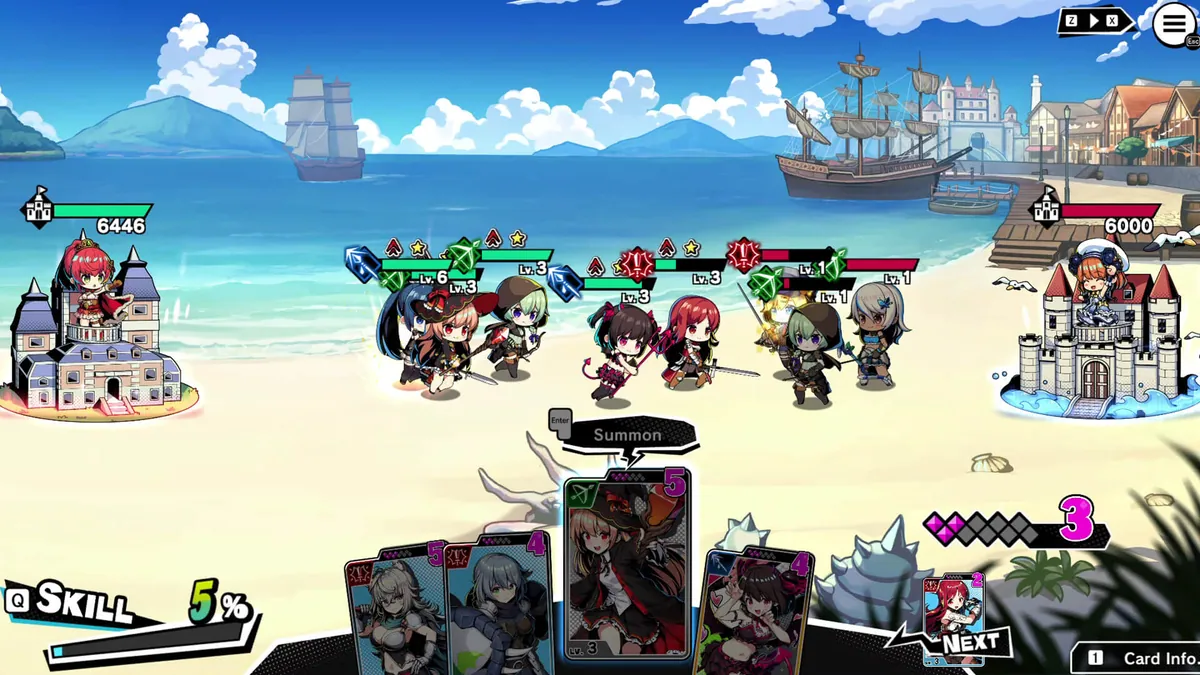
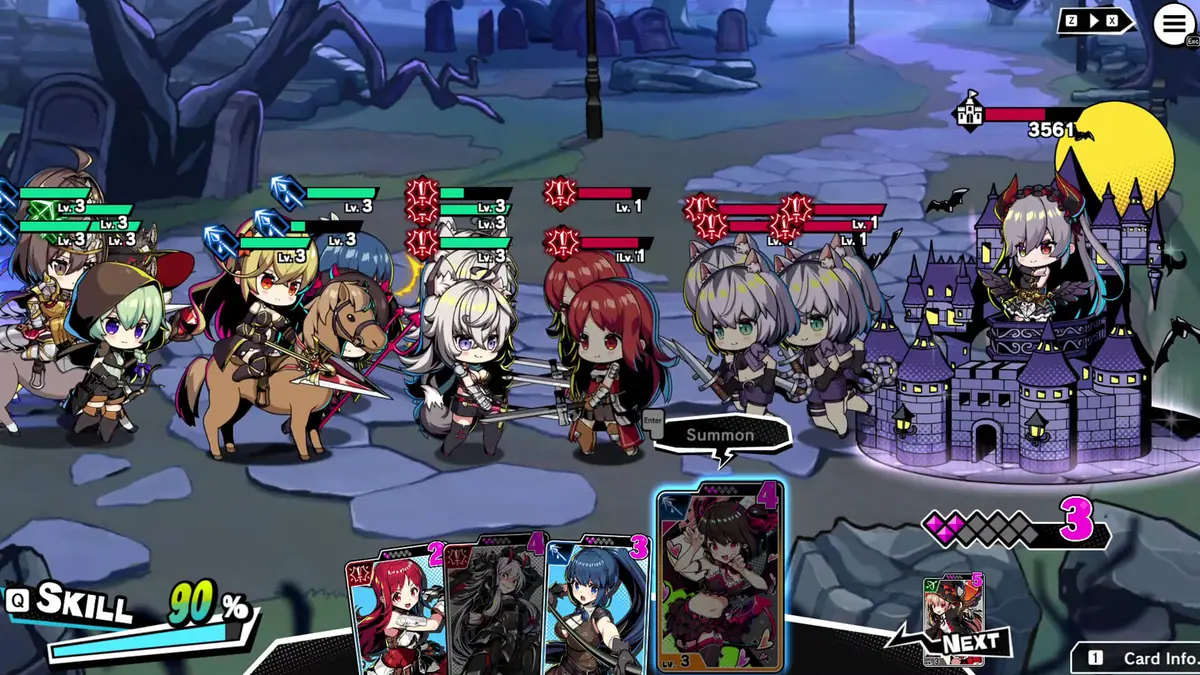
Combat is lane-based rather than turn-based. You summon units from the cards in your hand by spending a resource that accumulates during the fight, those units advance down lanes automatically, and the objective is to breach the enemy castle before they breach yours. So the decisions are what to summon, when, and in which lane — a tempo problem rather than a statistics problem.
Deck construction is the layer above. Cards come from battles and events, and every run you build a different deck from what the run happens to offer. This is the roguelite element and it is implemented properly: the same princess played twice presents genuinely different problems because your available answers differ.
Between runs, story content unfolds across multiple endings depending on progression. The Story Rich and Multiple Endings tags are earned rather than decorative — there is a narrative through-line about the war between princesses rather than a scene gallery.
Strategy is the listed genre, and unusually for this catalogue that is exactly what the game is.


What the free version really gets you
Duel Princess is a paid release rather than a free-to-play live service, and that shapes everything about how it treats you.
There is no energy limiting how many runs you attempt, no premium currency accelerating deck quality, and no character sold separately from the base game. The cards you can draw are the cards the design intends you to draw, which is what makes the roguelite balance work — a game that sells you better starting cards cannot offer a fair run.
It is also DRM-free, which is worth mentioning because it means the copy you buy keeps working independently of any storefront's continued existence. Very little else in this catalogue offers that.
The trade-off is the same as with the visual novels: finite content. There are a fixed number of princesses, stages and endings, and once you have seen them the game does not manufacture more. Replay value comes from run variance rather than from a content drip, which suits some players and bores others.
Judge it as a paid indie strategy game. The relevant comparison is not against free card battlers but against what you would spend on one of them across a few months of daily play.
Duel Princess vs. the alternatives
| Game | Core loop | Free content ends | Pay-to-win? | Pick it if |
|---|---|---|---|---|
| Duel Princess | Build a fresh deck each run from stage-map offerings; summon units down lanes to breach the enemy castle. | Not applicable — paid, DRM-free, no currency or energy. Content is finite and run variance drives replay. | Nothing purchasable affects a run, which is what keeps the roguelite balance honest. | You want a real strategy game with per-run deck construction and can commit attention to it. |
| Smutstone | Persistent collectible deck built across weeks; board fights where positioning and play order decide outcomes. | Energy-capped daily; card pool stays workable free but narrow. | Decisive in PvP, where owning the specific counter-card matters. | You prefer a deck that persists and grows rather than one discarded each run. |
| Brothel City | Management strategy over a persistent city rather than discrete runs. | Free-to-play pacing, so progression slows steadily rather than ending. | Pay-to-accelerate; competitive elements are limited. | You want strategy in a builder framing with no run-loss risk. |
Questions people actually ask
Is Duel Princess actually a roguelite?
Yes, properly so. You build a new deck each run from cards the stage map offers, and losing a run means losing that deck. The same princess presents different problems on different attempts because your available answers change.
Is Duel Princess free to play?
No. It is a paid, DRM-free release with no premium currency, no energy system and no characters sold separately. Nothing purchasable influences the outcome of a run.
How does combat work in Duel Princess?
It is lane-based, not turn-based. You spend a resource that builds during the fight to summon units from your hand, they advance automatically, and you win by breaching the enemy castle first. The skill is tempo and lane choice.
Does Duel Princess have multiple endings?
Yes. Story content unfolds between runs and resolves differently depending on your progression, so the Multiple Endings and Story Rich tags reflect an actual narrative rather than a scene gallery.
What languages does Duel Princess support?
Japanese, English and Chinese. It is a Japanese-developed title, so the chibi art style and comedic tone follow that tradition.
Is Duel Princess good for beginners to deckbuilders?
It is approachable but not trivial. If you have played mainstream roguelite deckbuilders the structure will be instantly readable; if you have not, expect to lose several runs while you learn what the stage-map squares are worth.
If you like Duel Princess, try these
Filed under Strategy · Hentai · Fantasy · Anime · Multiple Endings · Harem · Cute